AI Isn’t a Technical Challenge for You as a Leader. It’s a Personal One
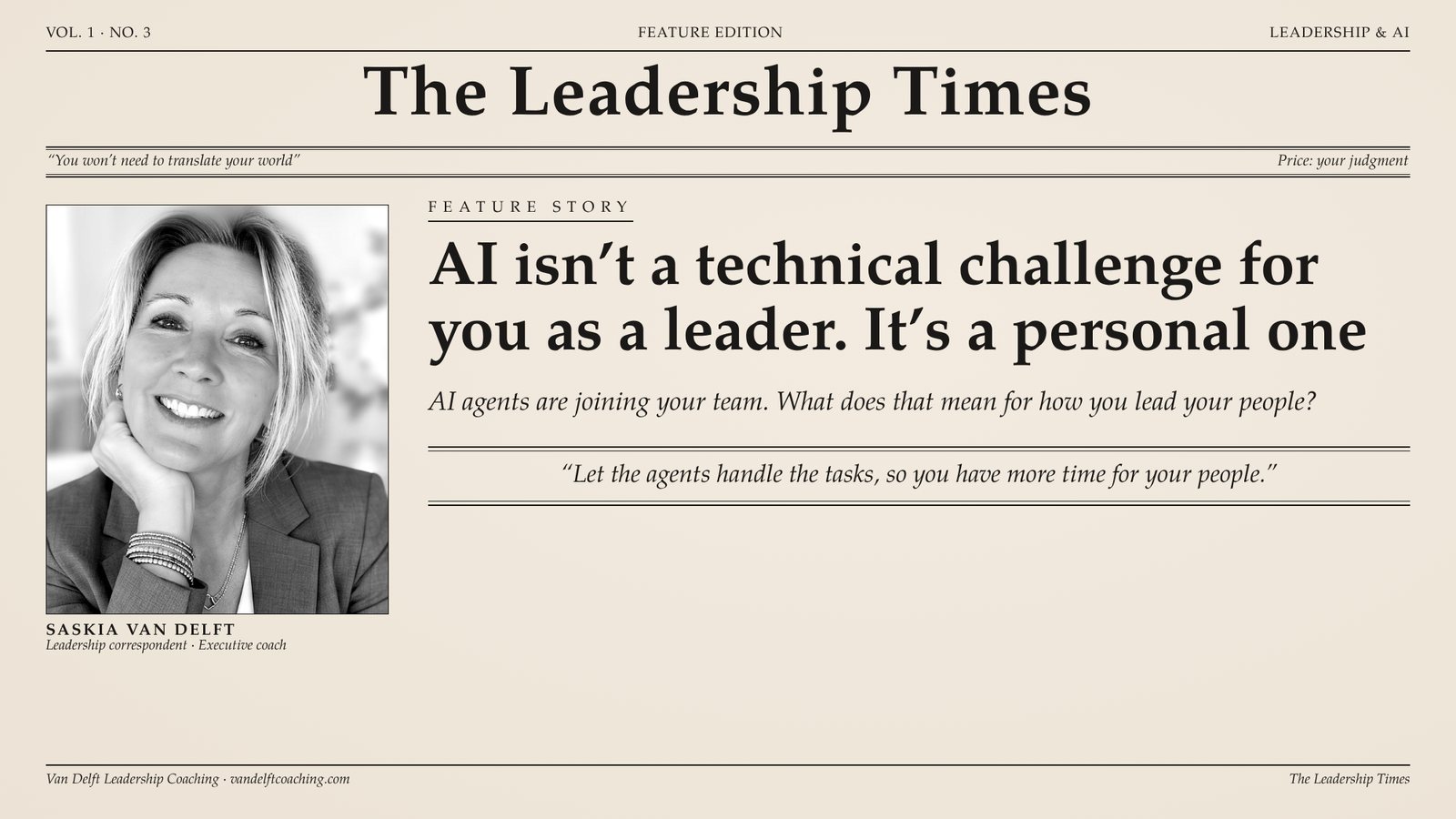
AI agents are joining your team. What does that mean for how you lead your people?
AI isn't a technical challenge for you as a leader. It's a personal one.
Why AI is a personal challenge for leaders
- Your expertise matters less. You built your career on knowing the answers. When an AI agent knows them too, the question becomes: what's my value now? That's an identity question, and it can be unsettling.
- You have to lead what you haven't mastered. You're expected to guide your team through AI while you're still figuring it out yourself. Saying "I don't know yet" feels risky at your level.
- You carry other people's worries. Your team is anxious about their jobs, and you have to reassure them without false promises. Meanwhile you may be wondering about your own role, especially if management layers are being cut.
- The pace keeps rising. AI makes everything faster, and the expectations from above rise with it. You have less time to think, while your decisions get bigger.
- Your old habits get in the way. Control, perfectionism and doing it yourself didn't serve you well before. With AI they work even less, because your job shifts to trust, delegation and judgment.
- Accountability gets blurry. When an agent makes a recommendation, you still own the decision. Where do you draw the line?
So what is an agentic manager (or “agent boss”)?
I kept hearing the term, so I did some digging. The closest definition comes from Microsoft's 2025 Work Trend Index, which describes the rise of the "agent boss": someone who builds, delegates to and manages AI agents that carry out tasks on their own. Soon, Microsoft says, every employee will work this way.
To manage an agent well, you need to give a clear brief, delegate the right tasks, check the quality and take responsibility for the outcome. Sound familiar? These are the same skills you've always needed to lead people. The difference is that soon everyone on your team will need them too, and you'll be the one coaching them.
What your people need from you as AI arrives
1. A clear AI strategy, and the story behind it
Your team wants to know the direction, what's allowed, and what it means for them.
2. Hands-on training
Your people learn AI by doing, not by reading a policy. Give them time and permission to experiment.
3. IT and technical support
Make sure your team has tools that work and knows where to get help, so curiosity doesn't turn into frustration.
4. Psychological safety
Make it safe for your team to say "I don't understand this yet" or "I'm worried", and really listen.
What an AI agent will never do for you
An agent can write your report and analyse your data. But it can't build trust with your team, have that difficult conversation, or sit across from someone who's worried about their future and say:
“I see you, and we’ll figure this out together.”
That's still your job, and it's the most important one you have. Maybe being an agentic manager simply means letting the agents handle the tasks, so you have more time for your people.
You won't solve these questions on a course. You work through them, ideally with someone outside your organisation who has no agenda except your growth. That's what executive coaching is for.
Book a call and let's talk.
Saskia van Delft is an Accredited Executive Coach with the Association for Coaching and a graduate of the Advanced Executive Coaching Programme at the Møller Institute, University of Cambridge. A former KLM flight attendant and International Head of HR, she coaches senior leaders in English and Dutch. More about Saskia.